Water Damage Restoration in Riverside, CA
Plumbing failures, water heater leaks, appliance problems and indoor flooding can move through flooring, walls, ceilings and adjoining rooms. We provide water extraction, moisture evaluation, structural drying and interior restoration for Riverside homes, apartments, mixed-use properties and business interiors.
Control the Source
If it is safe, stop or isolate the plumbing, fixture or appliance releasing water.
Check Connected Rooms
Follow the path through doorways, halls and adjoining floor areas.
Look at Lower Walls
Baseboards and lower drywall may remain wet after visible water recedes.
Check Above & Below
Multi-level and multi-unit losses may also affect ceilings or spaces below.
A Riverside Water Loss May Involve More Than the Room Where It Started
Water follows connected surfaces and building assemblies rather than stopping at a doorway or property-use boundary.
A plumbing leak inside a home may reach a hallway or adjoining bedroom. A loss inside an apartment or mixed-use building may reach a shared wall, floor or ceiling. A business-property leak may continue into another office, corridor or support area.
Restoration should therefore begin by defining the complete affected footprint before drying and repair decisions are made.

Residential Neighborhoods, Downtown Mixed Use and Employment Properties
Riverside’s planning framework includes numerous residential densities along with mixed-use, office, business/office park and industrial land-use categories.
The City of Riverside Specific Plans also cover distinct areas such as Downtown, Citrus Business Park, Hunter Business Park, Sycamore Canyon Business Park and other neighborhoods and employment districts.
Homes, Apartments & Condos
Plumbing, appliance, bathroom and water-heater failures may affect flooring, lower walls, ceilings and several connected residential rooms.
Mixed-Use & Multi-Occupancy Interiors
Downtown buildings may combine residential, office, retail, service or other uses where walls, floors, ceilings and building systems are shared between occupied spaces.
Offices, Business Parks & Industrial Interiors
Larger properties can include office areas, workspaces, corridors, support rooms and warehouse-adjacent interiors that require targeted water removal and drying.
The Visible Puddle Does Not Define the Entire Restoration Area
Different connected materials can carry water beyond the original room.
Doorways, Hallways & Flooring
Water can cross room boundaries or move beneath finished flooring without leaving an equally visible puddle in every area.
Baseboards, Drywall & Wall Cavities
Water reaching the edge of a room can affect trim and lower wall materials before visible staining develops.
Upper Floors & Ceilings Below
Plumbing or fixture failures above another occupied area may enter flooring and ceiling assemblies before visible dripping begins below.
Adjoining Units, Suites & Tenant Areas
Apartments, mixed-use properties and business interiors may require evaluation beyond the occupancy where the leak originated.
Choose the Service Based on What Is Happening Inside the Property
A larger flooded area, concealed wall moisture and a small appliance leak should not automatically receive the same restoration scope.
Emergency Water Extraction
Remove accessible standing water after plumbing failures, overflows, appliance leaks and larger indoor water releases.
View Service →Structural Drying
Address moisture remaining within affected flooring, drywall, ceilings and connected building materials.
View Service →Flood Cleanup
Cleanup and drying when water spreads through hallways, multiple rooms or a larger interior footprint.
View Service →Drywall Water Damage
Evaluate wet lower walls, ceilings and moisture that may remain behind finished surfaces.
View Service →Water Damage Repair
Repair appropriate walls, ceilings, trim and finishes after moisture conditions have been addressed.
View Service →Commercial Restoration
Water extraction and structural drying for offices, tenant suites, workspaces and other business interiors.
View Service →
Mixed-Use Buildings Can Create More Than One Moisture Path
Riverside’s Downtown Specific Plan describes a Downtown environment containing commercial services, offices, civic uses, residential development and mixed-use opportunities.
In a building with more than one occupancy or use, a water loss may move through shared floors, walls or ceilings before every affected area becomes visible.
The restoration question becomes not only “which room leaked?” but also “what occupied space is above, below or beside it?”
Check adjoining units and shared assemblies where appropriate.
Tenant suites and corridors may be connected to the original loss.
Ceilings, flooring and walls can carry moisture between occupancies.
Where Should You Look After Different Types of Water Loss?
The source often gives clues about which nearby materials should be checked.
Residential Water Damage Often Becomes a Connected-Room Problem
A washing machine, dishwasher, bathroom fixture, water heater or plumbing line can release water into adjoining rooms before every wet surface becomes obvious.
Flooring and lower wall materials are especially important to check when water travels horizontally across a residence.
Apartments and condominiums can add another layer because ceilings, floors or walls may be shared with another occupied space.
Flood & Multi-Room Cleanup

Larger Riverside Properties Can Have Several Connected Work and Support Areas
Riverside’s General Plan identifies business/office park and industrial land-use categories. Industrial uses can include light manufacturing, distribution, warehousing and wholesaling.
A water loss inside one of these properties may originate in an office, restroom, break room, utility area or other finished interior space and move toward neighboring work areas.
Restoration should stay focused on the actual affected footprint rather than assuming an entire large building requires the same treatment.
Check connected flooring, lower walls and adjacent workspaces.
Water can use hallways as a path into additional interior areas.
Finished rooms beside warehouse or industrial areas may need targeted drying.
Surface Water Removal and Structural Drying Are Separate Steps
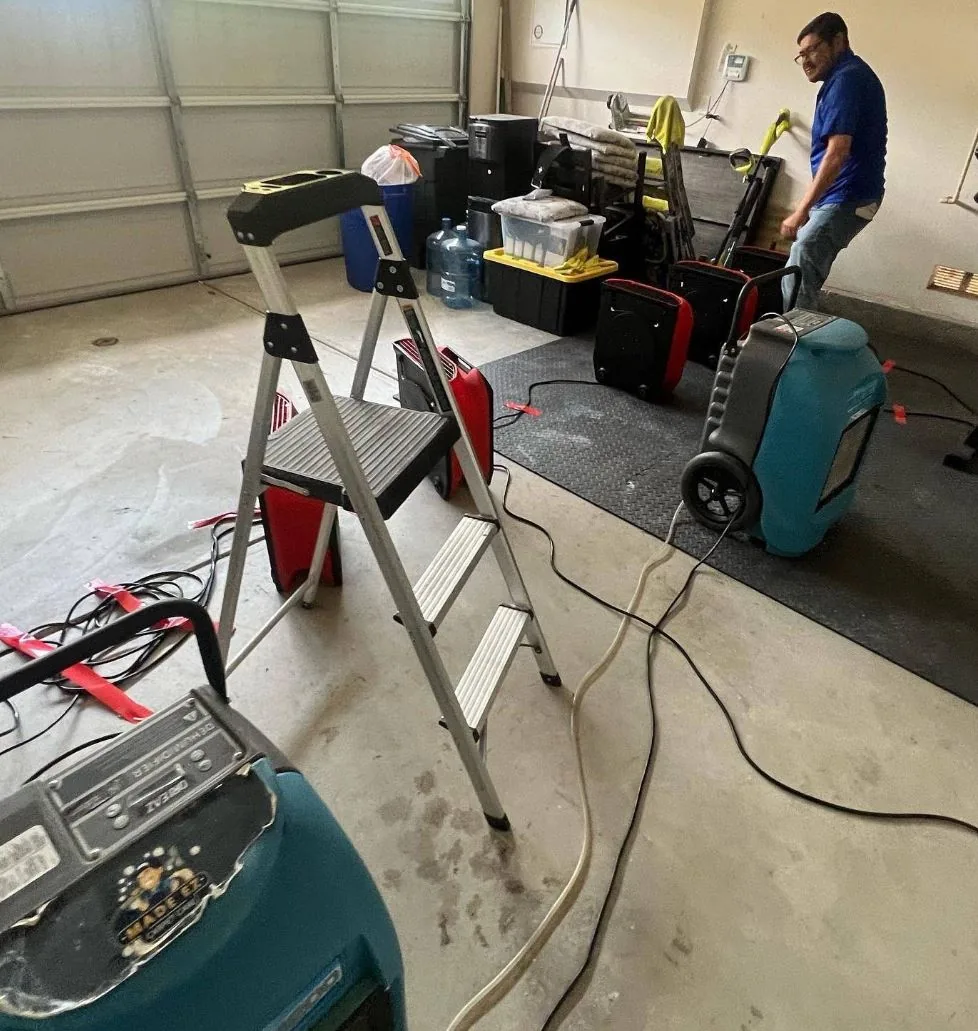
Water extraction removes accessible standing water. It does not automatically remove moisture absorbed by flooring, drywall, ceilings or other porous materials.
Structural drying addresses the affected materials that continue holding moisture after extraction.
The U.S. Environmental Protection Agency’s mold and moisture guidance recommends drying water-damaged areas and items within approximately 24 to 48 hours to help prevent mold growth.
Structural Drying Service
Five Decisions From the Original Leak to Interior Restoration
The process follows the water and affected materials instead of applying an identical package to every Riverside property.
Identify
Determine where the water originated and whether the source is controlled.
Trace
Follow moisture into connected rooms, flooring, walls and ceilings.
Extract
Remove accessible standing water from affected interior areas.
Dry
Address moisture remaining inside affected building materials.
Restore
Repair appropriate damaged materials after moisture conditions are addressed.
Has Water Reached Another Room, Unit or Work Area?
Request water extraction, moisture evaluation, structural drying and interior restoration for your Riverside property.
Explore Individual Water Damage Services
Use these pages when you need more detail about a particular stage of extraction, drying, cleanup or repair.
Explore Other Regional Water Damage Pages
Use the location page that best matches the property for more specific local restoration information.
Questions After Water Damage in a Riverside Property
Check adjoining flooring, doorways, baseboards, lower walls and any rooms connected to the original source. The moisture path can extend beyond areas that contained obvious standing water.
Yes. Depending on the floor assembly and water loss, moisture can move beneath the visible surface and reach adjoining areas.
It can. When occupied spaces share floors, ceilings or walls, water may move into adjoining materials or another area depending on the source and building layout.
Yes. Water can enter floor and ceiling assemblies before staining, bubbling finishes or dripping becomes visible in the lower room.
It may be. Extraction removes accessible water, while structural drying addresses moisture retained inside affected floors, walls, ceilings and other porous materials.
Yes. Water extraction, structural drying and interior restoration are available for affected offices, commercial suites and other business interiors in the Riverside service area.
Yes. Finished offices, corridors, restrooms, break rooms and other support spaces can require targeted drying when they are affected by a plumbing or utility water loss.
Tell Us Where the Water Started and Which Areas It May Have Reached
Describe the suspected source and whether nearby rooms, flooring, walls, ceilings, another unit or a connected business area may also be affected.