

Water Damage Restoration in Bel Air, CA
In a larger or multi-level home, water from a bathroom, kitchen, appliance or plumbing failure can travel well beyond the source room. We provide water extraction, moisture evaluation, structural drying and interior restoration for water-damaged properties throughout Bel Air.
Source Zone
Identify the bathroom, kitchen, laundry, utility or plumbing area where the water began.
Adjacent Zone
Check hallways, neighboring rooms, cabinetry, walls and flooring connected to the source.
Lower Level
When the loss starts upstairs, consider ceiling and wall materials on the level below.
Concealed Route
Moisture may remain inside flooring systems, wall cavities or ceiling assemblies after visible water is gone.
Map the Water Loss Across the Property Instead of Stopping at the First Wet Room
A water loss in a larger residential interior can involve several connected spaces before the full affected area becomes obvious.
Water may move through a doorway, beneath flooring, into lower wall materials or downward through a floor and ceiling assembly.
The useful restoration scope therefore begins with the source, then follows the moisture into every connected area that may have been exposed.

Four Directions Water Can Move From the Original Source
The source room is only the starting point. The next question is which connected zones may also contain moisture.
Water may spread across finished flooring toward another wall, threshold or built-in area.
Doorways and flooring transitions can allow water to reach a hallway, bedroom or adjoining living area.
Water reaching the room perimeter may enter drywall, trim or a concealed wall cavity.
An upper-level plumbing or fixture loss can enter the floor assembly and later become visible on a ceiling or wall downstairs.
A Residential-First Restoration Page Fits Bel Air’s Actual Planning Context
Bel Air is within the City of Los Angeles’ Bel Air–Beverly Crest Community Plan Area.
Bel Air–Beverly Crest Community Plan
The adopted planning framework emphasizes low-density single-family residential areas and addresses development within mountain and hillside locations.
Los Angeles City Planning maintains the Bel Air–Beverly Crest Community Plan page and its adopted land-use documents.
The adopted Community Plan specifically calls for preservation of low-density single-family residential areas and addresses development in mountain and hillside areas.
That planning context supports a residential-first page, but it does not mean every Bel Air home has the same size, layout or number of levels. Restoration scope should always follow the actual property and water path.

A Leak Upstairs Can Create a Different Damage Pattern Downstairs
Water from an upstairs bathroom, kitchen, appliance or plumbing line may enter the floor assembly before appearing below.
The lower-level sign might be a ceiling stain, damp drywall or moisture near a wall intersection even when the source room above shows a different pattern.
Those areas should be considered together when tracing the moisture path.
Source Room
Plumbing, fixture or appliance water enters the upper-level interior.
Floor Assembly
Water reaches materials between the upper room and lower-level ceiling.
Ceiling Below
Staining, dampness or damaged ceiling material becomes visible downstairs.
Connected Wall
Moisture may continue toward a wall intersection or adjoining lower-level area.
Start With the Water Source, Then Check the Next Connected Zone
When a residence contains multiple rooms or levels, divide the loss into zones rather than assuming only the first room needs evaluation.
Bathroom Loss
A tub, sink or toilet overflow may reach the doorway, hall, lower walls or ceiling beneath the room.
Kitchen Leak
Sink, appliance or supply-line water can affect cabinets, flooring and connected living areas.
Laundry / Utility Leak
Washing-machine or plumbing failures can move beyond the utility area into corridors and neighboring rooms.
Concealed Pipe Leak
A leak inside a wall or ceiling may affect several connected materials before water becomes visible.
The Visible Water Line Does Not Always Define the Entire Loss
After standing water is removed, moisture may remain in materials that are not fully visible from the room.
This can include wall cavities, flooring systems, ceiling assemblies, baseboards and other materials connected to the source.
Moisture evaluation helps determine where drying is required and where interior repair should wait until conditions are addressed.
Moisture may remain behind drywall or within a wall cavity.
Water may move beneath the visible flooring surface.
Water may travel before appearing at the visible stain below.
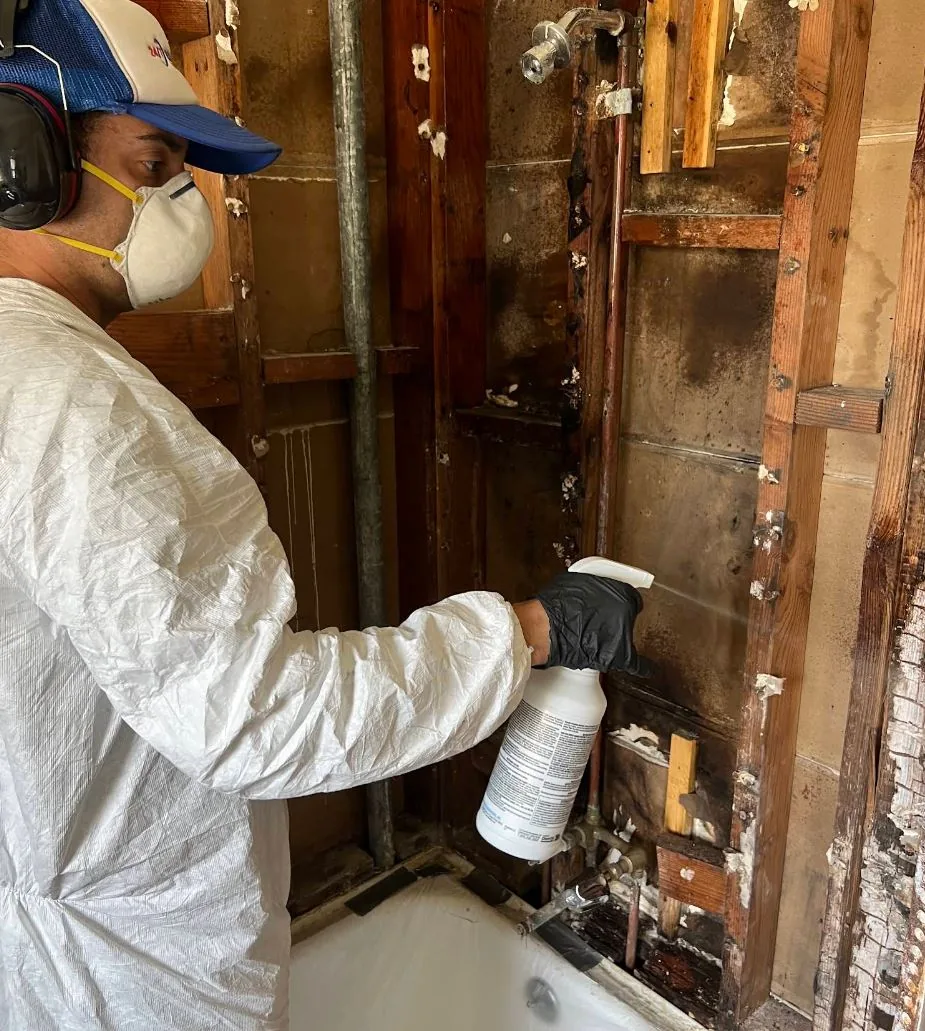
Match the Restoration Work to the Current Water and Moisture Condition
Different areas of the same home may require different stages of restoration depending on what the water has reached.
Standing Water
Remove accessible water following plumbing failures, overflows, appliance leaks and other interior water events.
Water Extraction →Several Rooms Are Affected
Address a broader interior footprint where water has crossed thresholds or reached multiple areas.
Flood Cleanup →Walls or Ceilings Are Wet
Evaluate drywall, ceiling materials and concealed areas associated with the source and moisture path.
Drywall Water Damage →Materials Retain Moisture
Address moisture remaining within affected flooring, walls, ceilings and other porous materials.
Structural Drying →Interior Materials Need Repair
Restore appropriate damaged finishes after water removal and drying requirements have been addressed.
Water Damage Repair →Commercial Property
Address water damage affecting offices and other business interiors within the broader service area.
Commercial Restoration →
Water Extraction Removes Accessible Water—Drying Addresses What Remains
The original room may look substantially better after standing water is removed, while nearby materials still contain moisture.
In a multi-level loss, this can include the flooring around the source, the floor assembly itself, ceiling materials below and nearby wall areas.
The U.S. Environmental Protection Agency’s mold and moisture guidance recommends drying water-damaged areas and items within approximately 24 to 48 hours to help reduce the opportunity for mold growth.
Five Decisions From the Source Room to the Full Property Moisture Map
Identify
Determine where the water started and whether the source has been controlled.
Map
Check adjoining rooms, lower levels and concealed paths connected to the source.
Extract
Remove accessible standing water from the affected interior areas.
Dry
Address moisture retained within affected building materials.
Restore
Repair appropriate interior materials after moisture conditions are addressed.
Has Water Reached Another Room or Level of the Property?
Contact 24/7 Water Damage Restoration for water extraction, moisture evaluation, structural drying and interior restoration in Bel Air.
Explore Individual Water Damage Services
Use the service page that best matches the current stage of the water loss.
Explore Other Water Damage Location Pages
Questions About Water Damage in Larger and Multi-Level Homes
Yes. Depending on the source and building layout, water may move through the floor assembly and affect ceiling or wall materials in one or more connected areas below.
They may need to be checked if water reached thresholds, connected flooring, walls or other materials leading beyond the source room.
Yes. Moisture may remain in drywall or concealed wall materials after the visible surface begins to dry.
Water can move along framing, plumbing or connected materials before becoming visible at a different point on the ceiling below.
No. Extraction removes accessible standing water. Structural drying addresses moisture retained within affected building materials afterward.
Not necessarily. The appropriate treatment depends on the material’s condition, the amount of water involved and whether remaining moisture can be adequately addressed.
Appropriate repairs should follow the required water removal and drying work so damaged finishes are not restored while moisture conditions are still being addressed.
Tell Us Where the Water Started and Which Rooms or Levels May Be Affected
Describe the source and whether the water may have reached an adjoining room, hallway, lower level, ceiling, wall cavity or connected flooring. Contact 24/7 Water Damage Restoration for service in Bel Air.