
Water Damage Restoration in Gardena, CA
A bathroom overflow, plumbing leak, appliance failure or interior flood can move through flooring, lower walls and connected rooms before the full extent of the damage becomes visible. We provide water extraction, structural drying and interior restoration for Gardena homes, apartments, mixed-use properties and businesses.
If it is safe, stop or isolate the source and stay clear of electrical hazards. Check adjoining rooms and spaces rather than focusing only on the first visible puddle. Water can move beneath flooring, behind baseboards, into lower walls and through shared building assemblies.
Connected Rooms and Shared Building Materials Can Extend the Affected Area
Water does not necessarily remain inside the room where a plumbing or appliance failure begins. A leak in a bathroom, kitchen or laundry area may move beneath flooring or through openings around walls and doorways.
In apartments, mixed-use buildings and business properties, the same water loss may also affect an adjoining unit, tenant space, corridor or support area.
Restoration begins by determining where the water traveled and which materials remain wet. Extraction, drying and repairs can then focus on the actual affected area instead of treating every nearby surface as damaged.
Four Places Water Can Travel Beyond the Original Leak
Visible standing water is only one indicator. Connected materials can carry moisture away from the room where the loss began.
Beneath Flooring
Water may travel beneath finished flooring and reach areas that appear dry from the surface.
Along Baseboards
Water moving across a floor can reach trim and the lower edge of adjoining walls.
Into Lower Walls
Drywall and other porous materials may retain moisture after the visible puddle has been removed.
Into Adjoining Spaces
Apartments, tenant spaces and connected rooms may be affected when water moves through shared floors, walls or ceilings.
Residential Density, Mixed Use and Business Properties Change the Restoration Scope
Gardena contains single-family neighborhoods as well as several levels of multi-family housing, commercial corridors, mixed-use areas, public or institutional properties and substantial industrial land.
The City of Gardena General Plan Land Use Plan identifies residential, commercial, industrial, public/institutional and Artesia Mixed Use designations within the city.
For water damage restoration, that variety matters because a loss inside a detached home may remain within a few rooms, while a leak in an apartment, mixed-use building or larger business property may involve several connected interior areas.
Homes, Apartments & Condos
Plumbing, appliance and fixture failures can affect flooring, lower walls, ceilings and adjoining living spaces. Multi-unit properties may require evaluation beyond the room where the leak first appeared.
Residential & Commercial Spaces Under One Building
When residential and business uses share walls, floors, ceilings or utility systems, a water loss may affect more than one occupancy area or tenant space.
Retail, Office & Service-Business Interiors
Restrooms, break areas, plumbing lines and water-using equipment can release water into suites, corridors and other connected commercial spaces.
Work Areas, Offices & Support Rooms
Larger industrial or employment properties can contain offices, work areas and support rooms where the complete moisture footprint may extend well beyond the source of a plumbing failure.
Restoration Services Based on What the Property Actually Needs
A small appliance leak and a larger multi-room water loss do not require the same restoration scope. Services should be based on the water source, affected materials and remaining moisture.
Emergency Water Extraction
Remove accessible standing water after plumbing failures, fixture overflows, appliance leaks and indoor flooding.
View Service →Structural Drying
Address moisture remaining within flooring, drywall, ceilings and other affected building materials after water removal.
View Service →Flood Cleanup
Cleanup and drying when water spreads through several rooms or a larger connected portion of the property.
View Service →Drywall Water Damage
Evaluate affected walls and ceilings where water may remain behind finished surfaces.
View Service →Water Damage Repair
Repair appropriate walls, ceilings, trim and interior finishes after the moisture problem has been addressed.
View Service →Commercial Restoration
Water extraction and structural drying for offices, tenant spaces and other business interiors.
View Service →
A Leak in One Room or Unit May Affect the Space Next to It
Multi-unit buildings create a different restoration situation from a detached property because walls, floors and ceilings may be shared between occupied spaces.
Water from a bathroom, kitchen, laundry connection or plumbing line can move into adjoining materials before moisture becomes visible in the neighboring room or unit.
Shared Walls
Lower wall materials may be affected on more than one side when water reaches a shared assembly.
Floors & Ceilings
Water from an upper-level fixture or appliance may affect ceiling materials or wall intersections below.
Small Rooms Can Produce Water Damage Across a Much Larger Area
Kitchens, bathrooms and laundry rooms contain multiple water connections, drains, fixtures and appliances within relatively compact spaces.
A dishwasher supply line, sink connection, toilet overflow or washing machine failure can release water quickly enough to reach a hallway, adjoining bedroom, living area or nearby wall system.
Extraction should address accessible water, while moisture evaluation determines whether nearby flooring, trim or wall materials also require drying.
Emergency Water Extraction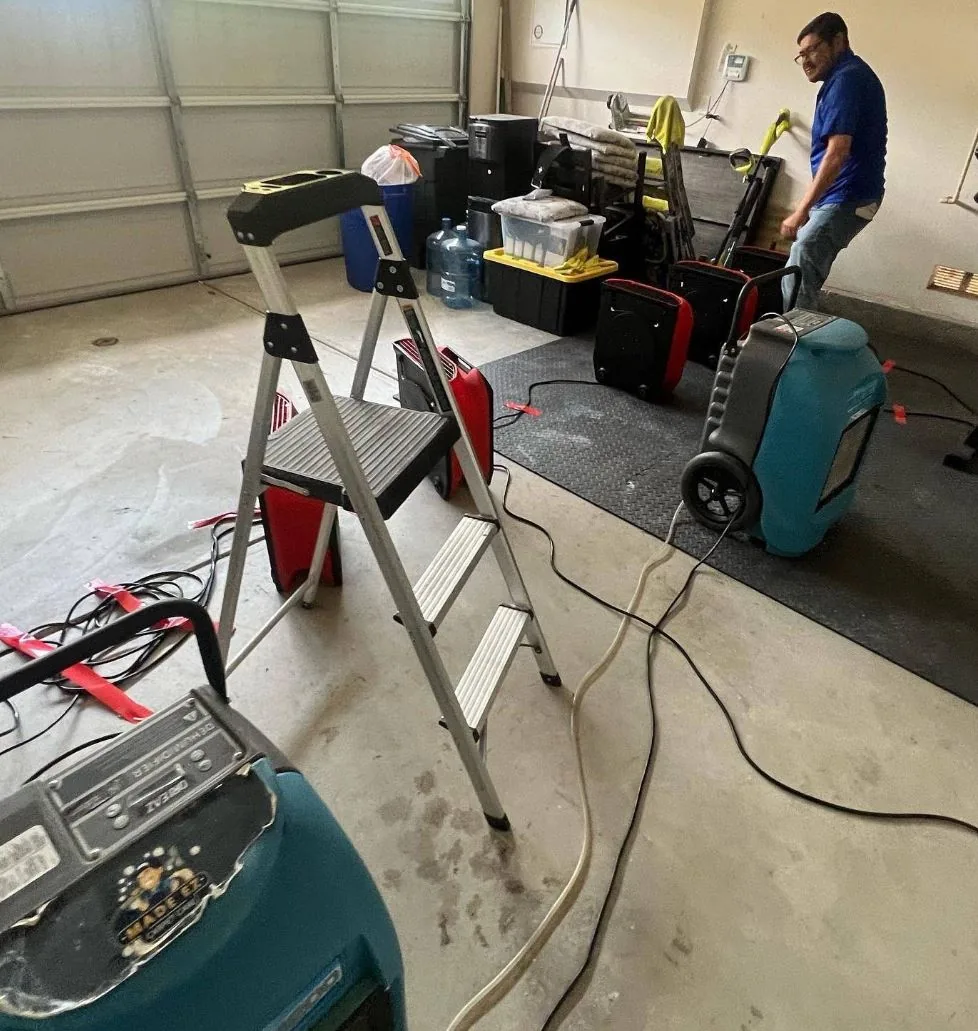
From the Water Source to a Dry Interior
The exact work varies from one loss to another, but the decision-making process follows the moisture rather than a fixed one-size-fits-all package.
Locate the Source
Determine where the water originated and whether the source has been stopped or isolated.
Define the Affected Area
Check connected flooring, walls, ceilings and adjoining rooms for signs that water traveled beyond the first visible location.
Extract Accessible Water
Remove standing water from affected rooms and surfaces so the remaining moisture conditions can be addressed.
Dry Wet Materials
Dry flooring, lower walls, ceilings and other materials that continue holding moisture after extraction.
Complete Appropriate Repairs
Restore damaged interior materials after the moisture conditions have been addressed.
Has Water Reached an Adjoining Room, Unit or Business Area?
Request water extraction, moisture evaluation, structural drying and interior restoration for a Gardena property.

Business Water Damage Can Extend Into Offices, Corridors and Work Areas
Commercial and industrial buildings may have plumbing in restrooms, break areas, utility rooms and service spaces located beside active work areas.
When a failure releases enough water, moisture may travel into carpeting, flooring, lower walls, office areas or adjoining support rooms before every affected surface becomes obvious.
Gardena also maintains multiple current specific planning areas , reflecting the city’s varied residential, commercial and employment environments.
Commercial Water Damage ServiceRemoving the Puddle Is Different From Drying the Materials
Water extraction removes accessible water from the property. Building materials may still contain moisture afterward.
Flooring assemblies, drywall, baseboards and concealed wall areas can require additional drying when they were exposed during the water loss.
The U.S. Environmental Protection Agency’s moisture guidance recommends drying water-damaged areas and items within approximately 24 to 48 hours to help reduce the opportunity for mold growth.
The drying plan should focus on affected materials rather than simply placing equipment throughout areas that remained dry.
Structural Drying Service

Restoration Planning Matters When Other Areas of the Property Remain in Use
Apartment buildings, mixed-use properties, offices and business spaces may remain partially occupied while restoration work is taking place.
The affected work area should be clearly identified so drying and restoration activities remain focused on the parts of the building that actually require attention.
This is especially relevant when only one tenant space, room, unit or section of a larger property was affected by the water loss.
Request Gardena ServiceFind the Service That Matches the Water Damage
These pages explain individual restoration services in greater detail.
Water Damage Restoration Beyond Gardena
Explore restoration information for other South Bay and greater Los Angeles communities currently covered by the website.
Questions After Water Damage in a Gardena Property
Yes. Water can move through doorways, beneath flooring and into lower wall materials. In multi-unit properties, shared assemblies may also allow moisture to reach an adjoining space.
Yes. A failed supply hose, drain or appliance connection can release water across flooring and into adjoining rooms before the source is stopped.
Surface appearance alone may not show the complete moisture condition. Lower wall materials and cavities may remain wet after accessible standing water has been removed.
Not necessarily. Extraction removes accessible water. Structural drying addresses moisture retained within flooring, drywall and other affected materials.
It can. Water from an upper-level plumbing or fixture problem may enter floor and ceiling assemblies before visible staining or dripping appears below.
Yes. Water extraction, structural drying and interior restoration are available for offices, commercial suites and other business properties affected by leaks or indoor flooding.
Water damage affecting offices, finished work areas and support spaces within industrial or employment properties can be evaluated for extraction, structural drying and appropriate restoration.
Tell Us Where the Water Started and Where It May Have Traveled
Describe the source of the water, the first area where it appeared and any nearby rooms, units, flooring, walls or ceilings that may also be affected.