
Water Damage Restoration in Beverly Hills, CA
A plumbing leak, overflowing fixture, appliance failure or ceiling leak can affect flooring, cabinetry, drywall, ceilings and concealed materials before the full moisture footprint becomes visible. We provide water extraction, moisture evaluation, structural drying and interior restoration for Beverly Hills homes, condominiums and commercial properties.
Water Source
Identify the pipe, fixture, appliance or other interior source first.
Visible Finish
Check flooring, cabinetry, drywall, ceilings, trim and other wet surfaces.
Concealed Layer
Consider materials behind, beneath or above the visible damaged finish.
Repair Timing
Complete appropriate repairs after moisture conditions have been addressed.
Restoration Should Protect the Interior by Finding Moisture Before Repairs Begin
Water damage does not affect every material in the same way. A wet floor may connect to the baseboard and lower drywall. A sink leak may involve the cabinet base and flooring underneath it. An upper-level leak may appear on a ceiling below.
Because finished surfaces can hide part of the moisture path, restoration should evaluate both the visible damage and connected materials before interior repairs are completed.
The goal is not to assume every finish needs removal. The useful first step is identifying which materials were affected and whether moisture remains.

Different Interior Materials Create Different Restoration Questions
Instead of treating every water loss as the same problem, start with the material that became wet and then check what is connected to it.
Water may remain on the visible surface, move beneath the finish or continue toward thresholds, baseboards and adjoining rooms.
Sink and appliance leaks can affect cabinet bases, toe kicks, nearby flooring and lower wall materials.
Moisture may affect the finished surface, lower wall area or concealed cavity depending on where the water entered.
Water from plumbing or fixtures above can move along building materials before appearing as a stain or damp area below.
Residential Areas, Multi-Family Housing and Commercial Districts Require Different Moisture Checks
Beverly Hills’ current planning framework includes single-family, multi-family, commercial and mixed-use land-use designations.
Homes, Condominiums & Multi-Family Properties
The Beverly Hills General Plan includes multiple single-family and multi-family residential classifications.
For water restoration, the important issue is the building layout: a leak may affect one room, several rooms, an upper or lower level, or shared building materials.
Business Properties & Mixed-Use Development
The City’s Mixed Use Overlay Zone allows residential and commercial uses together on designated commercial properties.
These building configurations can create shared floors, ceilings, walls and utility areas between different occupied spaces.
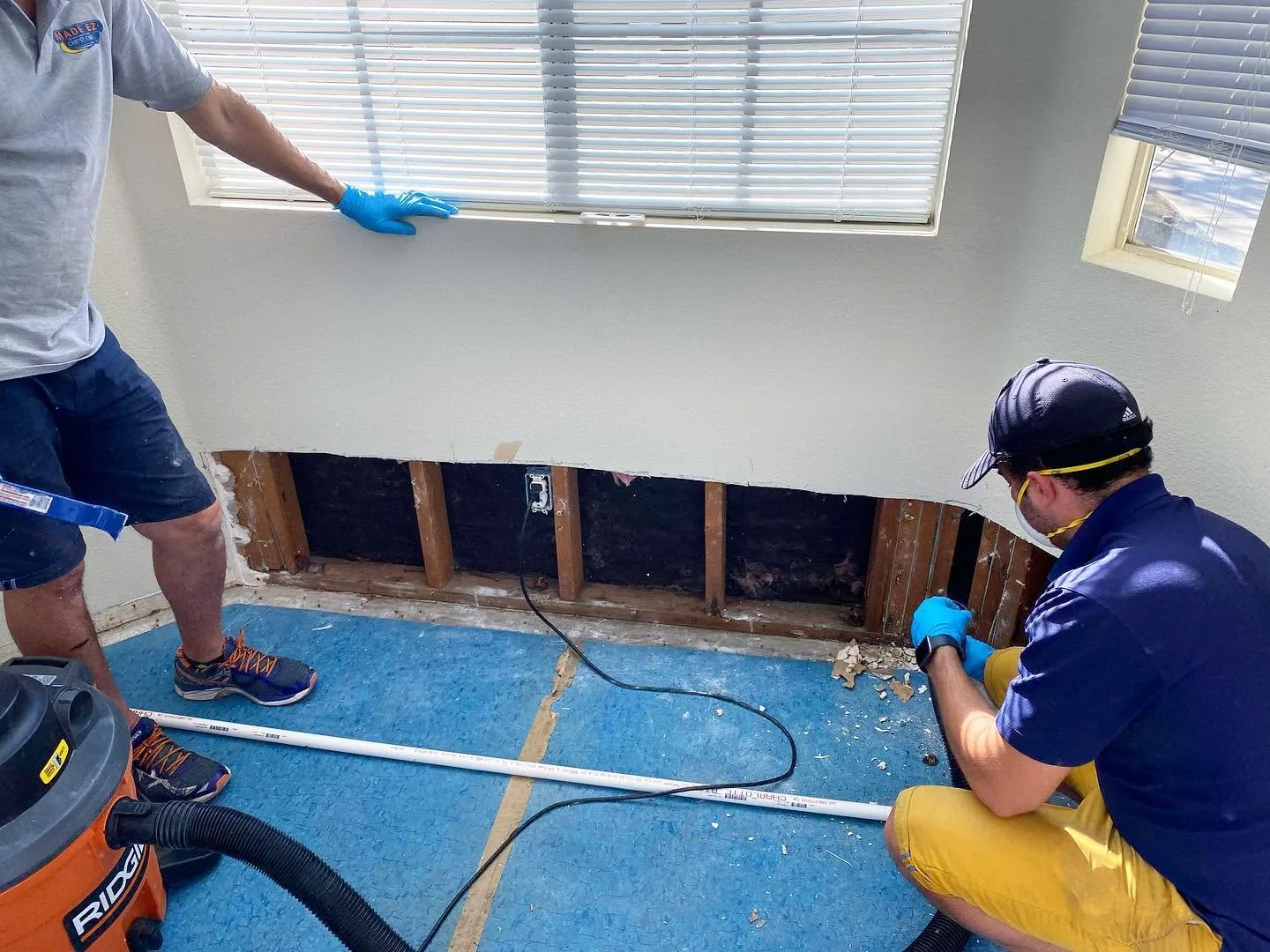
A Sink or Appliance Leak Can Extend Beneath the Finish You Can See
Kitchen and bathroom water losses often begin close to cabinets, vanities or built-in finishes.
Water may affect the visible cabinet base and then continue toward the toe kick, flooring, lower wall or concealed materials behind the enclosure.
That is why wiping up the visible water does not automatically define the complete affected area.
Source Connection
Sink plumbing, appliance supply or drain connection releases water.
Cabinet Base
Water reaches the cabinet floor, vanity base or enclosed area.
Flooring Edge
Moisture moves toward or beneath finished flooring near the cabinet.
Lower Wall
Baseboards and lower drywall may become part of the same moisture footprint.
The Water Line on the Floor May Not Show How Far Moisture Traveled
Water can spread across an exposed surface, move beneath the finished floor or cross a doorway into another room.
The edge of the visible wet area is therefore not always the same as the edge of the affected moisture footprint.
Accessible standing water or visible wet flooring.
Thresholds, baseboards and lower walls around the wet area.
Adjoining flooring that may have received water from the source room.

Match the Restoration Service to the Current Material Condition
Different stages of a water loss require different work. Start with what is currently wet and what has already been affected.
Standing Water
Remove accessible water after plumbing, fixture, appliance or indoor flooding events.
Water Extraction →Several Rooms Are Wet
Address a larger interior loss where water has crossed thresholds or entered several connected spaces.
Flood Cleanup →Walls or Ceilings Are Wet
Evaluate drywall, ceiling materials and concealed areas associated with the moisture path.
Drywall Water Damage →Materials Retain Moisture
Address moisture remaining in flooring, walls, ceilings and other affected porous building materials.
Structural Drying →Commercial Interior
Address water damage affecting offices, retail spaces, professional suites and other business interiors.
Commercial Restoration →Repair After Drying
Restore appropriate interior finishes after moisture conditions have been addressed.
Water Damage Repair →
The Visible Ceiling Damage May Be Separated From the Original Water Source
A bathroom, plumbing or appliance loss on an upper level can enter the floor assembly before becoming visible downstairs.
Water may also move laterally through framing or a wall intersection, which means the first visible ceiling stain may not sit directly beneath the source.
The source area, floor assembly and affected room below should therefore be considered as parts of the same water-loss pathway where appropriate.
Source Room
Identify the fixture, plumbing line or appliance involved.
Floor Assembly
Consider materials between the upper source and lower occupied area.
Ceiling Below
Evaluate visible staining, dampness or damaged ceiling materials.
Wall Intersections
Check connected areas if moisture moved laterally from the source.
Commercial Corridors Can Include Offices, Retail and Residential Uses in Connected Buildings
Beverly Hills’ Mixed Use Overlay Zone allows residential and commercial uses together on eligible commercial properties in designated areas of the City.
Eligible locations include portions of Wilshire Boulevard, La Cienega Boulevard, Robertson Boulevard, Olympic Boulevard, Santa Monica Boulevard and South Beverly Drive.
For water restoration, a mixed-use layout can mean the source is in one occupancy while moisture affects another floor, tenant area, wall or ceiling.
Plumbing losses may affect suites, flooring, ceilings and adjoining areas.
Restrooms and plumbing areas can create moisture paths toward customer areas.
Shared floors, ceilings and walls may connect different occupancies.

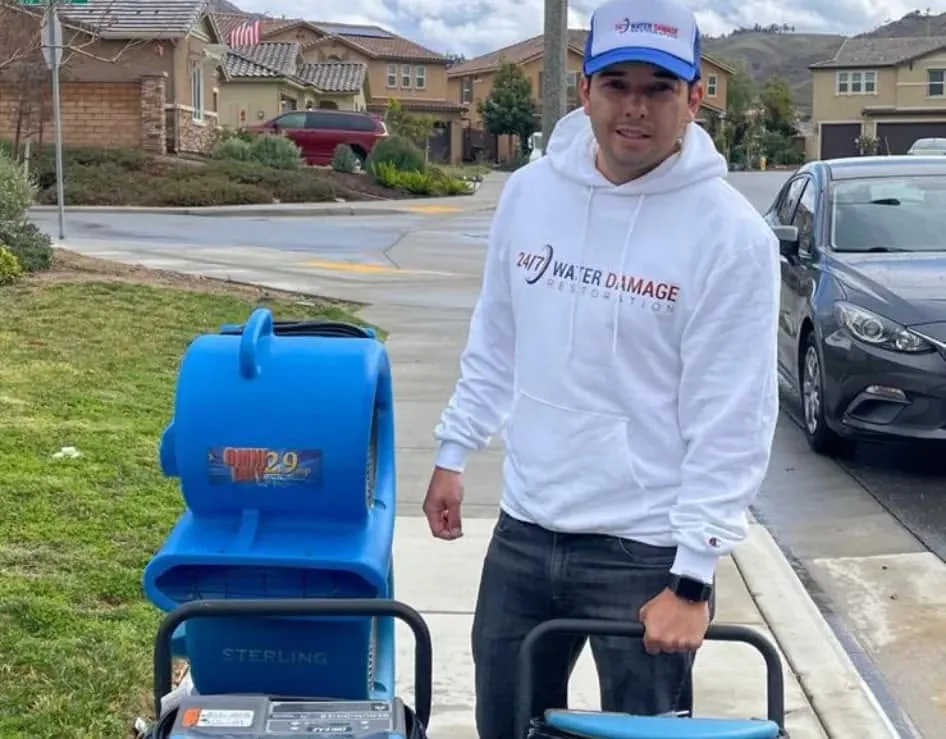
Visible Water Removal and Material Drying Are Different Stages
Water extraction removes accessible standing water. Flooring, cabinetry, drywall, ceilings and other porous materials may continue holding moisture afterward.
That moisture should be considered before damaged interior finishes are repaired or replaced.
The U.S. Environmental Protection Agency’s mold and moisture guidance recommends drying water-damaged areas and items within approximately 24 to 48 hours to help reduce the opportunity for mold growth.
Five Decisions From the Water Source to the Final Interior Repair
The process should follow the actual material condition rather than automatically removing or repairing every finish in the room.
Identify
Determine where the water started and whether the source has been controlled.
Evaluate
Check visible finishes and surrounding materials for the moisture footprint.
Extract
Remove accessible standing water from affected interior areas.
Dry
Address moisture retained within affected building materials.
Restore
Repair appropriate finishes after moisture conditions are addressed.
Is Water Affecting Flooring, Cabinetry, Walls or Ceilings?
Contact 24/7 Water Damage Restoration for water extraction, moisture evaluation, structural drying and interior restoration in Beverly Hills.
Explore Individual Water Damage Services
Use the service page that best matches the current water or material condition.
Explore Other Water Damage Location Pages
Questions About Water Damage in Finished Residential and Commercial Interiors
Yes. Depending on the flooring system and the water loss, moisture may remain beneath or beside the visible finished surface.
It can. Water may affect the cabinet base, flooring, toe kick, lower drywall or concealed materials depending on the source and duration of the leak.
Not necessarily. The appropriate treatment depends on the material, its condition, the amount of water involved and whether remaining moisture can be adequately addressed.
Yes. Water can enter the upper floor assembly and affect ceiling or wall materials on the level below.
Appropriate repairs should follow the required water removal and drying work so finishes are not restored while moisture conditions are still being addressed.
Depending on the building configuration, water may move through a shared floor, ceiling or wall assembly from one type of occupancy to another.
Yes. Water extraction, structural drying and interior restoration are available for affected offices, retail spaces and other commercial interiors in the Beverly Hills service area.
Tell Us Where the Water Started and Which Interior Materials Are Affected
Describe the suspected source and whether flooring, cabinetry, baseboards, walls, ceilings, another room or a commercial space may also contain moisture. Contact 24/7 Water Damage Restoration for service in Beverly Hills.