
Water Damage Restoration in Culver City, CA
In offices, creative workspaces and other connected interiors, a water loss may begin in a restroom, break area, appliance connection or plumbing line and then move into active work zones, corridors or adjoining rooms. We provide water extraction, moisture evaluation, structural drying and interior restoration throughout Culver City.
Source / Support Area
Restroom, sink, utility or appliance area where the water starts.
Active Workspace
Office, studio-type or other occupied work area beside the source.
Shared Route
Flooring, corridor, wall or ceiling connecting multiple interior zones.
Downstream Area
Another office, room, suite or tenant area reached by the water path.
In a Connected Interior, Follow the Water Across Operational Zones
A commercial water loss may start in a small support space but affect a much larger occupied area.
Water from a restroom, sink, break-area fixture or plumbing connection can cross flooring, enter lower walls or reach a corridor before becoming visible inside the next work zone.
Residential properties require the same source-to-material thinking, but business properties add another question: which occupied or operational areas are connected to the source?

Culver City’s Current General Plan Recognizes Several Distinct Employment, Residential and Mixed-Use Districts
Culver City’s General Plan 2045 is the current citywide framework for land use and future development.
General Plan 2045
The City’s General Plan 2045 has been in effect since October 9, 2024 and includes dedicated policies for Downtown, studio districts, residential areas, commercial areas and mixed-use development.
The City of Culver City’s General Plan 2045 is the City’s current umbrella planning document.
Its Land Use and Community Design Element identifies Downtown as a regional employment, dining, entertainment, residential and cultural destination. It also contains specific policies for Culver City’s studio districts and creative economy.
Those city planning categories do not indicate water-damage risk. Their relevance here is simply that Culver City contains a varied mix of homes, apartments, offices, studios and connected commercial interiors that may require different moisture-routing decisions.
Where Should You Look After Water Escapes From a Support Area?
The source itself is only the first zone. The next question is which occupied or connected areas sit along the water path.
An overflow or plumbing loss may reach the doorway, corridor or adjoining work area.
Water can move beneath cabinets and finished flooring before reaching another occupied zone.
A plumbing or equipment connection may release water into work flooring, support rooms or nearby walls.
Water entering from above may become visible inside an office, workspace or corridor below.
Standing water may cross several work zones before reaching its final visible boundary.
The Source Area and the Operational Impact Area May Be Different

Culver City’s Hayden Tract Adds a Distinct Creative-Office and Former Industrial Context
The City maintains a dedicated Hayden Tract Specific Plan project page.
The City describes Hayden Tract as an area with industrial history and an established creative-office and arts presence. Its planning work is intended to guide future residential, commercial and mixed-use development while continuing the area’s creative-economy character.
For water restoration, the relevant issue is not the industry itself. It is the way converted and contemporary work interiors can contain offices, open work areas, support rooms and connected finished spaces within one property.
Support Room
Plumbing and water connections may be concentrated away from the main work area.
Open Work Area
Water may spread across a larger finished floor from a smaller source zone.
Office / Studio-Type Area
Connected walls and flooring can extend the moisture footprint.
Adjacent Interior
Another room or suite may require evaluation when the water path reaches it.
Downtown Combines Employment, Residential, Dining, Entertainment and Commercial Uses
Culver City’s General Plan 2045 Land Use and Community Design Element identifies Downtown as a regional job, dining, entertainment, residential and cultural arts destination.
That means water damage in the Downtown area may involve residential interiors, offices, restaurants, shops or other commercial properties.
The property-specific restoration question is whether the water remained inside the source space or crossed a shared floor, wall, ceiling or corridor into another occupied area.

Trace plumbing water through the room and connected building assembly.
Check support spaces, occupied work areas and adjoining rooms.
Water may move from a service area toward customer-facing flooring.
Different occupancies may be connected by shared floor, wall or ceiling assemblies.
Residential Water Damage Still Follows the Same Source-to-Connected-Area Logic
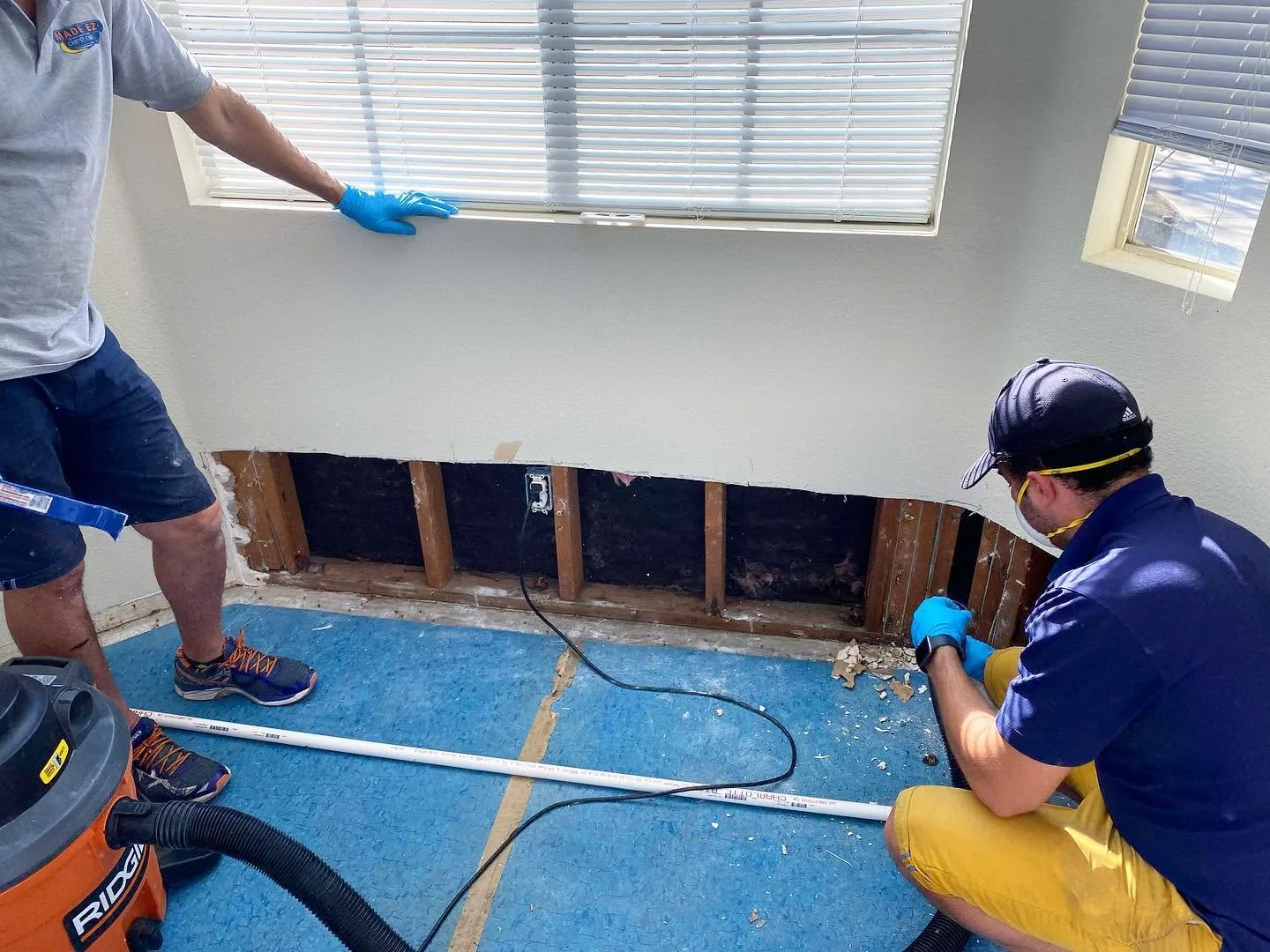
In a house, water may travel from a kitchen, bathroom or laundry area into a hallway or neighboring room.
In an apartment or condominium, the same type of source may also involve a shared wall, ceiling or floor assembly depending on the building layout.
The goal is not to assume every connected area is wet. It is to determine which areas the actual water path reached.
Match the Service to the Water Condition and Affected Zone
Standing Water
Remove accessible water following plumbing failures, fixture overflows and larger indoor water releases.
Water Extraction →Several Connected Areas
Address a larger moisture footprint when water has moved across multiple rooms, work zones or interior spaces.
Flood Cleanup →Wet Walls or Ceilings
Evaluate drywall, ceiling materials and concealed areas along the source-to-damage path.
Drywall Water Damage →Retained Moisture
Address moisture remaining inside flooring, walls and other affected porous materials.
Structural Drying →Office or Business Property
Address water affecting workspaces, offices, retail interiors and other commercial areas.
Commercial Restoration →Interior Repair
Restore appropriate damaged finishes after required extraction and drying work are complete.
Water Damage Repair →The Main Workspace May Look Dry While Connected Materials Still Hold Moisture
Removing surface water does not confirm that flooring, drywall or concealed materials along the edge of a work area have fully dried.
This is especially relevant where water begins inside a smaller support area and then moves into a larger occupied interior.
The U.S. Environmental Protection Agency’s mold and moisture guidance recommends drying water-damaged areas and items within approximately 24 to 48 hours to help reduce the opportunity for mold growth.

Five Decisions From the Source Room to the Full Operational Moisture Boundary
Identify
Determine where the water started and whether the source has been controlled.
Map
Identify connected rooms, work zones, corridors and assemblies along the water path.
Extract
Remove accessible standing water from affected interiors.
Dry
Address moisture retained within affected floors, walls and other materials.
Restore
Repair appropriate interior finishes after moisture conditions are addressed.
Has Water Moved From a Support Room Into a Workspace or Another Interior Zone?
Contact 24/7 Water Damage Restoration for water extraction, moisture evaluation, structural drying and interior restoration in Culver City.
Explore Individual Water Damage Services
Explore Other Water Damage Location Pages
Questions About Water Damage Across Connected Work and Residential Spaces
Yes. Water may cross the doorway, move beneath flooring or reach lower wall materials in an adjoining corridor or occupied area.
It can. The moisture footprint depends on the source, amount of water, floor transitions and the physical connection between the spaces.
No. Culver City describes Hayden Tract as having an industrial history along with an established creative-office and arts presence, and the City is using a Specific Plan process to guide future residential, commercial and mixed-use development.
Yes. Water may move through a floor and ceiling assembly and become visible in the occupied area below.
Yes. Depending on the flooring system and water loss, moisture may remain beneath the visible surface or inside adjoining materials.
No. Extraction removes accessible standing water. Structural drying addresses moisture retained within affected building materials afterward.
Yes. Water extraction, structural drying and interior restoration are available for affected offices, commercial interiors and other business properties in the Culver City service area.
Tell Us Where the Water Started and Which Work or Residential Areas It Reached
Describe whether the source is in a restroom, break area, utility room, kitchen, bathroom, appliance area or another location and whether flooring, walls, ceilings, corridors, offices, rooms or adjoining spaces may also be affected. Contact 24/7 Water Damage Restoration for service in Culver City.